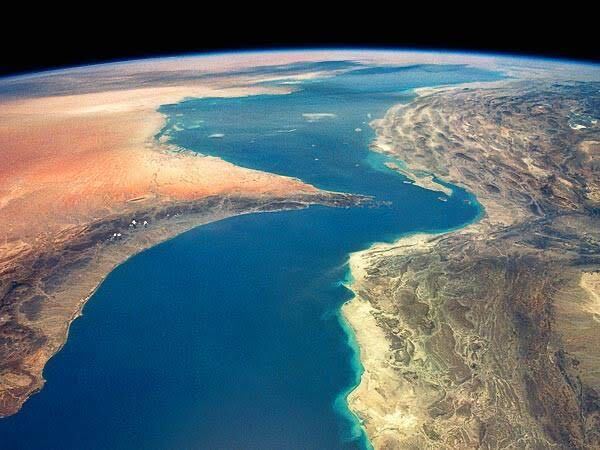
The Bottleneck: Understanding the Strait of Hormuz
If you have noticed the price of oil ticking up lately, you’re not alone. Interestingly, the reason has nothing to do with Canadian oil producers, but instead with a conflict that’s taking place almost 10,000 kilometres away in the Middle East. It is a conflict that has plunged the entire Middle East into a period of uncertainty, and all eyes are being turned to a vital shipping artery at the center of it all: the Strait of Hormuz.
At just 21 miles wide at its narrowest point (Wikimedia Foundation, n.d.), the Strait of Hormuz is the gateway for oil-rich countries to the world. 20 million barrels per day pass through the strait, which is roughly 20% of global oil trade (U.S. Energy Information Administration, 2025).
In addition to this, 20% of global Liquified Natural Gas (LNG) (International Energy Agency, n.d.) and 20-30% of global fertilizer (UN Trade and Development, 2026) also transit through. This underscores the immense importance that this region holds, and any disruption would be bound to have major consequences for economies across the globe. It is why the Strait of Hormuz is known as “The Jugular of the Global Economy.”
By the Numbers: The Cost of the Crisis
Today, in the midst of an escalating war, traffic through the Strait of Hormuz has all but halted, with only a mere fraction of the traffic prior to the conflict’s commencement on February 28th (Wikimedia Foundation, n.d.). The most evident consequence of the Strait’s closure has undoubtedly been the all but noticeable rise in gasoline prices at the pump. At the time of this writing, the average cost of gasoline in the City of Ottawa is at 178.9 cents per litre (CityNews Ottawa, n.d.), a 42% increase from 126.1 cents/litre (recorded in January 2026) (Government of Canada, n.d.). This has put a strain on Canadians’ finances, adding another layer of uncertainty in the midst of the rising cost of living across the country. Another industry that has been affected by this conflict is the cost of fertilizer. Around 40% of the world’s urea and 50% of sulphur transits through Hormuz (Meredith & Taylor, 2026), and cutting off this supply has put pressure on Canadian farmers, who depend on these resources for their crops. It has also put a strain on Canada’s potash industry. According to National Resources Canada, approximately one-third of global potash is exported from this country (Quon, 2026). There’s only one problem: potash production depends heavily on these fertilizers. As fertilizer is the single largest variable cost for grain production, the price surge will likely manifest in higher grocery prices by early 2027.
How Canada Can Turn Crisis into Advantage
With Canadians feeling the pinch of the rising cost of living, the Federal Government could consider providing some relief to its citizens through a variety of mechanisms:
● A temporary gas tax “holiday” could save Canadians hundreds of dollars at the pump.
● Expand the Farm Credit to help Canadian farmers offset costs
● Expand the Canada Student Loans/Grants Program to further support students
● Explore the expansion of Canada’s Crude and LNG industries to establish more self-sufficiency for the gas industry
What you should do as a Student
As emerging professionals in this country, Canadians appreciate and value the sense of diversity that defines our society. Our classmates, professors, and acquaintances come from all types of backgrounds and from around the world, including the Middle East. In this regard, it is safe to say that the community is worried about the uncertainty that this conflict brings. The fluidity of the situation should be a wake-up call for how students can mitigate the repercussions that affect our daily lives. Here are some ways to adapt:
● Budget carefully: as reiterated earlier, it is expected that grocery prices will climb at a more rapid pace. Students can overcome these challenges by exploring new ways to shop, such as looking for grocery coupons on Flipp and student discounts on the Student Price Card (SPC) and Student Beans.
● Transportation: with gas prices rising, students may opt to explore other modes of transport, such as traveling by bike or opting for public transport.
● Look for opportunities: apply for summer jobs early and apply in large numbers to increase your chances of landing a position!
● Stay informed: understanding geopolitics can provide relevant skills and knowledge that actively affect your decision-making and your wallet.
References
Amid regional conflict, the Strait of Hormuz remains critical oil chokepoint - U.S. Energy Information Administration (EIA). (2025, June 16).
https://www.eia.gov/todayinenergy/detail.php?id=65504
Gasoline report - Canadian gasoline prices. Government of Canada. (n.d.).
https://open.canada.ca/data/en/dataset/3ff1e1de-d665-4398-a12a-e8ce55f887ac
Meredith, S., & Taylor, C. (2026, March 25). It’s not just oil and gas. The Strait of Hormuz blockage is rattling another vital commodity. CNBC.
https://www.cnbc.com/2026/03/25/fertilizer-price-iran-war-food-security-inflation-urea-potash-nitrogen-farmers.html
Ottawa gas prices: Citynews. CityNews Ottawa. (n.d.).
https://ottawa.citynews.ca/gas-prices/
Quon, A. (2026, March 23). Sask. is a potash and agriculture giant. So why is conflict in the Middle East a problem for farmers?. CBC News. https://www.cbc.ca/news/canada/saskatchewan/potash-fertilizer-strait-of-hormuz-9.712790
Strait of Hormuz disruptions: Implications for global trade and development. UN Trade and Development (UNCTAD). (2026, March 10). https://unctad.org/publication/strait-hormuz-disruptions-implications-global-trade-and-development
Strait of Hormuz Factsheet. IEA. (n.d.).
https://www.iea.org/about/oil-security-and-emergency-response/strait-of-hormuz
Wikimedia Foundation. (n.d.). 2026 Strait of Hormuz crisis. Wikipedia.
https://en.wikipedia.org/wiki/2026_Strait_of_Hormuz_crisis