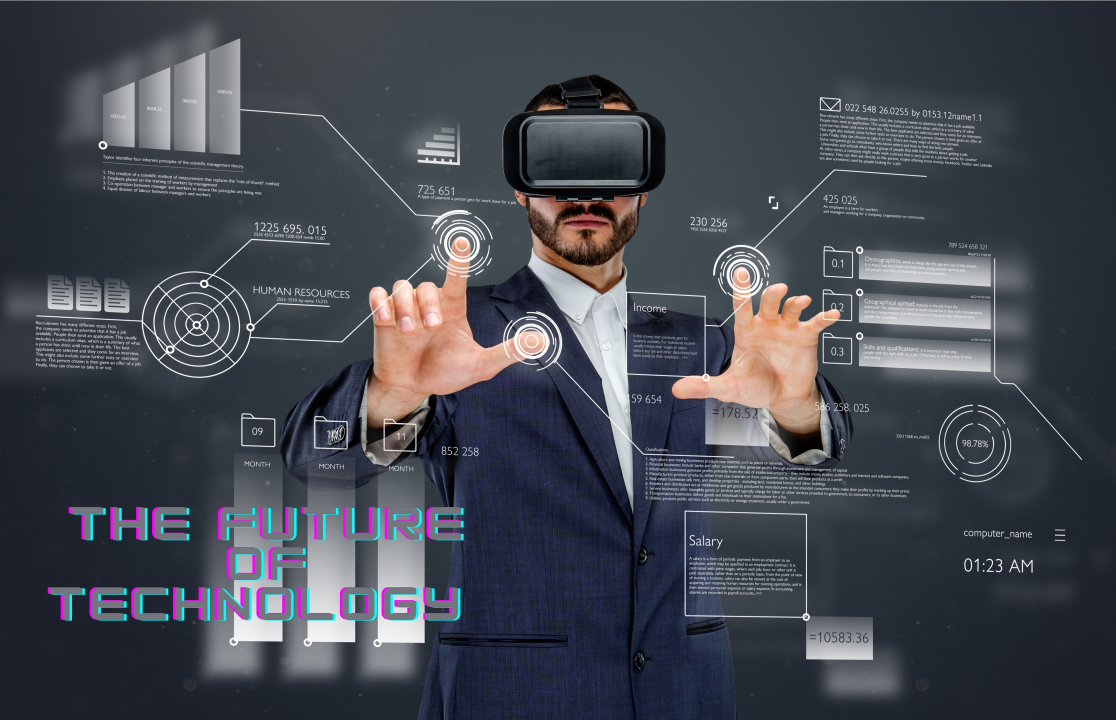
The future of work is no longer a distant concept: It is unfolding in real time.
From artificial intelligence and automation to remote collaboration platforms and data-driven decision making, technology is not just transforming industries; it is redefining how we work, why we work, and what it means to build a career.
The Acceleration of Technological Change
Over the past decade, advancements in artificial intelligence, cloud computing, blockchain, and machine learning have accelerated at an unprecedented pace. What once required entire departments can now be handled by algorithms. Repetitive tasks are increasingly automated, while decision-making processes are augmented by predictive analytics.
But this transformation is not about replacing humans. It is about reshaping human value.
Routine and manual roles are being reduced, while demand grows for analytical thinking, creativity, emotional intelligence, and cross-functional problem-solving. The competitive advantage of tomorrow’s workforce lies not in performing tasks faster, but in thinking better.
Innovation as a Survival Skill
Innovation is no longer reserved for tech companies. It has become a survival skill across all sectors as finance, healthcare, education, public policy, and international development.
Organizations that embrace digital transformation are more agile, data-driven, and resilient. However, innovation is not merely about adopting new tools. It is about fostering a culture that encourages experimentation, continuous learning, and adaptability.
The professionals who thrive will be those who:
• Embrace lifelong learning
• Develop digital literacy
• Understand data and emerging technologies
• Combine technical skills with strategic thinking
In this new era, adaptability is the new job security.
Remote Work and the Globalization of Talent
Technology has dissolved geographical barriers. Remote work platforms and collaborative tools have enabled companies to access global talent pools. The future workforce is increasingly borderless.
This shift offers immense opportunity but also intensifies competition. Professionals are no longer competing only locally; they are competing globally.
At the same time, virtual teams require stronger communication skills, cultural intelligence, and self-discipline. The human side of work has not disappeared: it has become more important than ever.
The Ethical Dimension of Technological Progress
As innovation accelerates, ethical questions grow more complex. Who is responsible when AI makes biased decisions? How do we protect data privacy? What happens to workers displaced by automation?
The future of work must be guided not only by efficiency but also by responsibility. Policymakers, corporations, and educational institutions must collaborate to ensure that technological advancement does not widen inequality but instead creates inclusive growth.
Reskilling and upskilling programs will be essential to prevent structural unemployment and to empower individuals to transition into emerging roles.
The Human Advantage
Despite the rise of automation, one truth remains constant: technology cannot replicate human judgment, empathy, or moral reasoning.
The future of work will belong to those who combine technological fluency with emotional intelligence, creativity, and ethical awareness.
Innovation will shape the tools. Humans will shape the purpose.
Technology is not the future of work; people are. Technology is simply the catalyst.
The question is not whether change is coming. It already has. The real question is whether we are prepared to evolve with it.
The professionals who succeed will not be those who resist change, but those who understand it, shape it, and use it responsibly.
The future of work is not something we wait for. It is something we build.