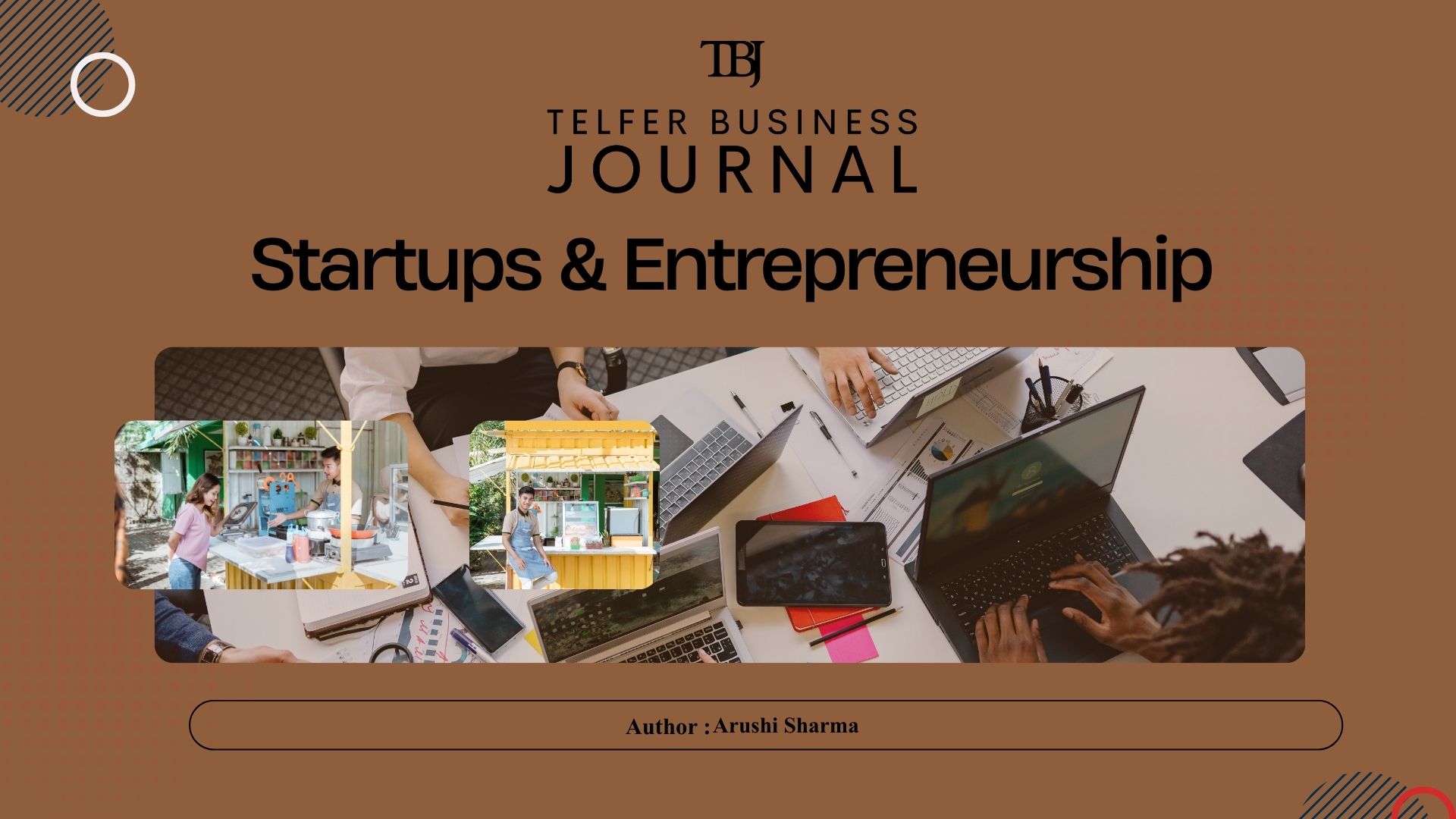
Entrepreneurship is the heartbeat of the business world. It is where ideas stop being abstract thoughts and begin turning into real solutions, real companies, and real impact.
At its core, entrepreneurship is not merely about launching ventures or chasing valuations; it is about identifying unmet needs, taking calculated risks, and having the courage to act when outcomes are uncertain. Entrepreneurship strengthens communities, creates opportunity, and empowers generations to believe that meaningful change often starts with a single idea and a willing individual.
Today marks the official launch of TBJ’s Business Theme Week, and we are beginning this series exactly where business begins: entrepreneurship and startups. Before corporations, before stock markets, and before complex global systems, there were entrepreneurs—individuals who chose initiative over inertia. From today onward, TBJ will explore the many layers of business, starting with its roots and gradually building toward the systems that shape modern economies. This first article sets the foundation by exploring startups, the dynamic and often fragile vehicles through which entrepreneurial ambition becomes reality.
Startups are frequently portrayed as overnight successes, but this narrative rarely reflects the truth. In reality, a startup is an organization built to search for a scalable and repeatable business model under conditions of extreme uncertainty. Unlike traditional businesses that operate within established markets, startups exist to discover their market. They test hypotheses, gather feedback, pivot when necessary, and learn at an accelerated pace. This constant state of experimentation is what makes startups both unstable and uniquely powerful.
At the center of every startup is the entrepreneurial spirit. This spirit is defined by resilience, curiosity, and an unwavering belief in possibility. Entrepreneurs are not simply risk-takers; they are problem-solvers who are willing to sit with discomfort, ambiguity, and repeated failure. They question inefficient systems, challenge outdated assumptions, and often build solutions born directly from personal frustration. Many founders begin not with the intention of disrupting industries, but with the desire to make one small part of life easier, fairer, or more accessible.
Some of the world’s most influential startups began with these exact motivations. Airbnb emerged from a housing problem faced by its own founders. Stripe was created to simplify online payments for developers. Canva was built to democratize design for people without formal training. These companies did not initially aim for scale; scale followed clarity. Their success underscores a critical truth about entrepreneurship: meaningful growth often comes from obsessing over the problem, not the outcome.
This entrepreneurial energy is not limited to global tech hubs. Ottawa, in particular, has developed a quietly powerful startup ecosystem rooted in research, technology, and long-term thinking. Often described as a “builder city,” Ottawa produces startups that prioritize substance over spectacle. Shopify stands as the city’s most prominent success story, having evolved from a small e-commerce solution into a global platform that supports millions of merchants. Its growth reflects the strength of Ottawa’s ecosystem, where innovation is deeply connected to practical problem-solving.
Beyond Shopify, Ottawa is home to startups like Assent, which helps companies navigate complex supply chain sustainability and compliance challenges, and MindBridge AI, which applies artificial intelligence to financial auditing and fraud detection. These ventures highlight a defining feature of Ottawa-based startups: many operate in highly technical, regulated, or mission-driven spaces. Supported by institutions such as Invest Ottawa, local universities, and government-backed research, the city fosters entrepreneurs who build for durability rather than rapid hype.
Across Canada, startups continue to redefine the national business landscape. In Toronto, Wealthsimple has transformed personal finance by making investing more transparent and approachable for younger generations. In Montreal, Lightspeed has grown from a point-of-sale startup into a global commerce platform serving businesses worldwide. Vancouver-based Hootsuite anticipated the rise of social media as a business tool long before it became mainstream. Together, these companies illustrate how Canadian startups often combine innovation with responsibility, emphasizing trust, accessibility, and long-term value.
Canadian entrepreneurship is also increasingly shaped by purpose. Many founders today are building startups that address climate change, mental health, accessibility, and social equity. This shift reflects a broader evolution in entrepreneurial motivation, where success is no longer measured solely by profit, but by impact. Startups are becoming vehicles for change, allowing entrepreneurs to align their values with their ventures and build businesses that contribute meaningfully to society.
However, the entrepreneurial journey is rarely linear. Behind every successful startup is a series of setbacks, rejections, and moments of doubt. Founders must navigate funding uncertainty, team alignment, product-market fit, and constant external pressure. Failure is not a deviation from the entrepreneurial path; it is embedded within it. The ability to learn, adapt, and persist often matters more than the originality of the idea itself.
In recent years, entrepreneurship has become increasingly accessible. Student-led startups, digital platforms, accelerators, and open-source tools have lowered traditional barriers to entry. This democratization of entrepreneurship signals a powerful shift: innovation is no longer confined to elite institutions or well-funded networks. Instead, it is emerging from classrooms, community spaces, and diverse lived experiences. The entrepreneurial spirit is being redefined as something that can be learned, nurtured, and shared.
As TBJ begins this Business Theme Week, entrepreneurship sets the foundation for everything that follows. Every industry explored, whether finance, healthcare, sustainability, or technology, has been shaped by individuals who dared to imagine alternatives. Entrepreneurship reminds us that business is not static. It evolves with people, ideas, and purpose. Startups, in their earliest stages, represent possibility in its purest form.
This is only the beginning. Over the coming days, TBJ will dive deeper into the forces shaping modern business. But it all starts here, with entrepreneurship, the place where ideas take their first risk and futures begin to form.
References
Blank, S., & Dorf, B. (2012). The startup owner’s manual: The step-by-step guide for building a great company. K&S Ranch. https://steveblank.com/books-for-startups/
Ries, E. (2011). The lean startup: How today’s entrepreneurs use continuous innovation to create radically successful businesses. Crown Business. https://theleanstartup.com/
Shopify Inc. (2024). About Shopify. https://www.shopify.com/about
Invest Ottawa. (2024). Ottawa’s startup ecosystem. https://www.investottawa.ca/ottawas-startup-ecosystem
Assent Inc. (2024). About Assent. https://www.assent.com/about
MindBridge Analytics Inc. (2024). Company overview. https://www.mindbridge.ai/company
Wealthsimple Technologies Inc. (2024). Our story. https://www.wealthsimple.com/en-ca/about
Lightspeed Commerce Inc. (2024). About Lightspeed. https://www.lightspeedhq.com/about/
Hootsuite Inc. (2024). Our history. https://www.hootsuite.com/about
Airbnb, Inc. (2024). About us. https://www.airbnb.com/about
Stripe, Inc. (2024). About Stripe. https://stripe.com/about
Canva Pty Ltd. (2024). Our story. https://www.canva.com/about/